 ChatGPT
 Grok
Grok
 Perplexity AI
 Claude



Growth means the complete overhaul of an organization. What was working so well in a small team environment can quickly become stifling as departments and processes grow and the demands of customers increase. Many organizations turn to ERP software as a magic bullet to cure the chaos of operations, without understanding why. ERP systems fail in a growth-oriented business environment.
In 2026, companies require flexible solutions that can grow with them. As part of evolving ERP future trends, a generic solution platform may seem attractive in the beginning, but it will eventually bring in inflexibility, customization hurdles, and performance issues that explain why ERP systems fail, impacting companies directly. It is crucial to understand the limitations of traditional ERP solutions before opting for a long-term solution.
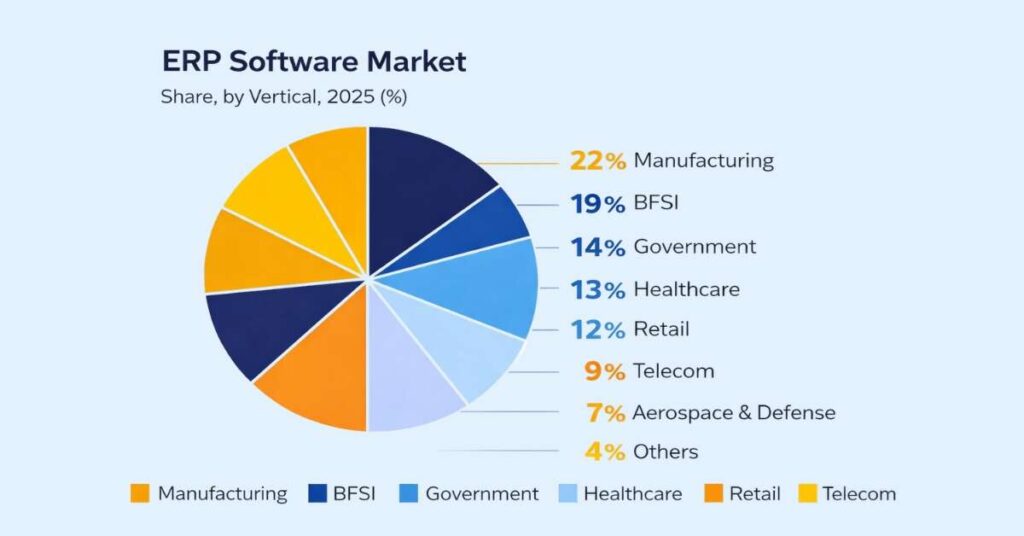
What is ERP?
ERP (Enterprise Resource Planning) is a centralized computer system that assists in managing and automating various business operations like finance, human resources, inventory, procurement, sales, and supply chain management.
ERP allows for the smooth integration of data across different departments. This means that instead of different departments working with different systems, spreadsheets, and applications, ERP allows all of them to work from a single system.
Without ERP, companies often struggle with data silos situations where information is stored in isolated systems that don’t communicate with each other. For example, the sales team may have different customer data than the finance team, leading to reporting inconsistencies and delays in decision-making. ERP removes these silos by creating a shared database that connects all business functions.
Explain The Workflow of ERP?
The workflow disruption of an ERP system explains how information moves seamlessly across departments, removing disconnected information gaps and creating a unified operational structure while aligning with evolving ERP future trends.
Data Capture and Centralization
ERP starts with the collection of data from daily business operations like sales orders, inventory, or purchase requests. Data is not stored in different systems but in a single database to avoid duplication of information.
Seamless Data
Once the data is entered, it automatically triggers the flow of information to the concerned departments. In an ai-enabled ERP system, an ‘order confirmed’ triggers the update of the inventory, as well as the finance department, and also initiates the procurement process.
Automated Process Execution
ERP follows predefined workflows that trigger the next step automatically. Approvals, invoice generation, and stock replenishment happen based on system rules, reducing manual effort and improving efficiency.
Real-Time Visibility
Managers track operations through live dashboards, ensuring every department works with accurate and consistent information.
Reporting and Insights
Because all processes are connected, ERP trends 2026 generates reliable reports instantly. Integrated data supports better planning, forecasting, and strategic decision making tools across the organization.
How to Choose ERP For a Fast-Growing Company?
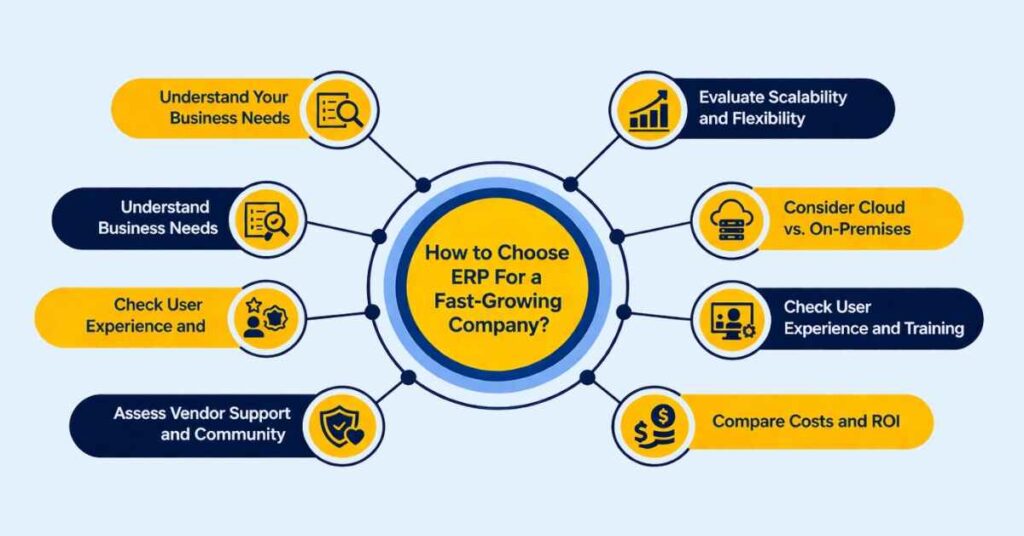
The right ERP system matters for fast-growing companies because the wrong choice can disconnect teams, slow operations, and restrict growth. A strong digital transformation erp strategy supports expansion and improves visibility across departments.
Understand Your Business Needs
Begin by finding the core processes of your business, such as finance, inventory, sales, HR, and production. Make a list of the problems you are trying to solve (reporting, inventory uncertainty, unconnected departments). This will help you zero in on an ERP solution that meets your needs rather than one that offers functionality you may never use.
Evaluate Scalability and Flexibility
A fast-growing company needs an ERP that scales with users, locations, products, and transactions. It should allow new modules to be added easily, keeping all operations connected within one unified system instead of scattered across separate tools.
Consider Cloud vs. On-Premises
Cloud ERP offers remote access, automatic updates, and lower upfront costs ideal for growing companies with limited IT staff. On-premises ERP gives more control but can require more infrastructure and maintenance. Consider your IT capability, budget, and data security needs when deciding the deployment model.
Check User Experience and Training
ERP adoption depends on usability and how well it handles erp integration challenges. Evaluate the interface, training, and vendor support to ensure faster adoption and minimal disruption.
Assess Vendor Support and Community
Strong vendor support matters, especially during implementation and growth phases. Look for ERP systems with good documentation, responsive support teams, and active user communities. This ensures you can resolve issues quickly and leverage best practices.
Compare Costs and ROI
ERP pricing includes more than the software license, covering implementation, customization, training, integration, and maintenance. Always assess the ERP total cost of ownership and compare TCO with long-term ROI to ensure lasting value.
Review Security and Compliance
Ensure that it offers robust data security, access controls, and compliance features of erp systems. A growing company often handles more sensitive data, so protecting that information is critical.
What Are ERP Scalability Challenges For Mid-Sized Businesses?
Mid-sized businesses often adopt ERP to unify operations and improve data integration, but as they grow, scalability becomes a major concern. If the ERP system is not built to expand smoothly, it can create isolated information gaps across departments, slow performance, and limit business agility.
Limited System Capacity
In some ERP systems, there may be difficulties in processing the rising number of transactions, users, or data. When the number of customer orders, inventory, and financial transactions increases, the system may slow down.
Rigid Architecture
Legacy or poorly designed ERP platforms may not support easy customization or module expansion. When new departments, locations, or product lines are added, businesses often turn to separate tools to fill the gaps, which fragments information and disrupts unified workflows.
Integration Complexities
Mid-sized companies often rely on additional tools like CRM, eCommerce platforms, or third-party logistics systems. As operations expand, problems with ERP systems can emerge, especially when scaling while maintaining smooth data with these systems becomes technically complex and costly.
High Upgrade and Maintenance Costs
As businesses expand, especially when moving from legacy ERP systems, they may require system upgrades, additional licenses, or infrastructure improvements. For on-premises ERP systems, scaling can demand significant IT investment and downtime.
How AI is Changing ERP Systems in 2026?
In 2026, AI is transforming ERP systems from static record-keeping tools into intelligent decision engines, shaping key erp future trends. Modern cloud ERP platforms now use machine learning to automate routine processes, reduce manual data entry errors, and improve business process automation across finance, HR, and supply chain operations. Predictive analytics helps teams anticipate demand shifts, prevent supply chain disruptions, and optimize inventory management in real time. AI-powered dashboards provide real time visibility with smarter insights instead of raw reports. Conversational AI assistants also simplify complex workflows, making ERP systems faster, more intuitive, and better aligned with growing business needs and scalability goals.
Conclusion
ERP systems are very important for linking activities and increasing efficiency, but a “one size fits all” approach may hinder the ERP flexibility systems as the business grows. Inflexibility in processes, limitations in performance, and growth limitations are some factors that may hamper progress rather than facilitate it. By the year 2026, businesses require flexible and AI enabled ERP systems that enable real-time visibility, scalability, and future agility.
Outgrown Your ERP? Choose a system that scales with you. Get a Custom Quote
Most frequently asked questions
1. Why do growing teams outgrow standard ERP systems?
Standard ERP systems often lack flexibility, making it hard to adapt to changing processes and business expansion.
2. How does a rigid ERP affect daily operations?
It slows down workflows, creates delays, and makes it harder for teams to respond quickly to business needs.
3. Can ERP customization solve growth challenges?
Limited customization may help initially, but over-customization can increase complexity and long-term costs.
4. What role does real-time data play in modern ERP?
It helps teams make faster decisions with accurate insights instead of relying on outdated information.
5. Why is flexibility important in ERP for 2026?
Flexible ERP systems adjust to growth, support new processes, and keep operations smooth as business needs evolve.